« I don’t know if it was the music, the love, or both…but after listening to the lullabies,
my cat finally rested and started eating again.»
—Claire, testimonial—
The Therapeutic Power of Lullabies:
Singing to Heal and Connect
Lullabies, simple and repetitive melodies, have been used since ancient times to calm, comfort, and soothe little ones to sleep. But their power goes beyond rest: lullabies have a profoundly therapeutic effect, both for those who listen and those who sing them.
These melodies transcend generations and cultures. While traditionally associated with human babies, their influence extends to animals—particularly cats and dogs—who respond to gentle, repetitive tones in surprisingly positive ways.
Benefits of Using Your Voice as Therapy
SOOTHE THE NERVOUS SYSTEM
The vibrations of the voice help relax the nervous system, promoting a state of calm for both cats and humans.
REDUCE STRESS AND ANXIETY
Certain frequencies and sounds have powerful effects on wellbeing, helping us process challenging moments, whether they are temporary or chronic.
PROMOTES EMOTIONAL WELLBEING
Medicine and meditative songs can ease emotional tension, helping guardians express and release their emotions in a healthy way.
STRENGTHENS THE HUMAN-ANIMAL BOND
Gently singing or humming to cats reinforces the relationship, creating an environment of trust and security.
SUPPORTS PHYSICAL HEALTH
Research has shown that sound therapy, such as bioacoustics, can improve circulation, balance the immune system, and support cellular regeneration.
Scientific Evidence Supporting the Power of Lullabies

For Humans:
A study published in Infant Behavior and Development found that lullabies significantly reduce cortisol levels in babies, decreasing stress and promoting sleep. Additionally, their repetitive nature stimulates brain areas linked to cognitive and emotional development.

For Animals:
Bioacoustics, the science of how sound affects living beings, has shown that the gentle, repetitive tones of lullabies also benefit animals. Research, such as David Teie’s studies with cats, demonstrates that music specifically designed for them reduces stress and enhances overall wellbeing.

The Power of the Human Voice:
Neuroscience studies reveal that the human voice has a unique impact on listeners, especially when it conveys calmness and intention. This emotional and vibrational connection is key to the therapeutic effect of lullabies.
A ONE-OF-A-KIND SERVICE TO ELEVATE YOUR RELATIONSHIP WITH YOUR CAT
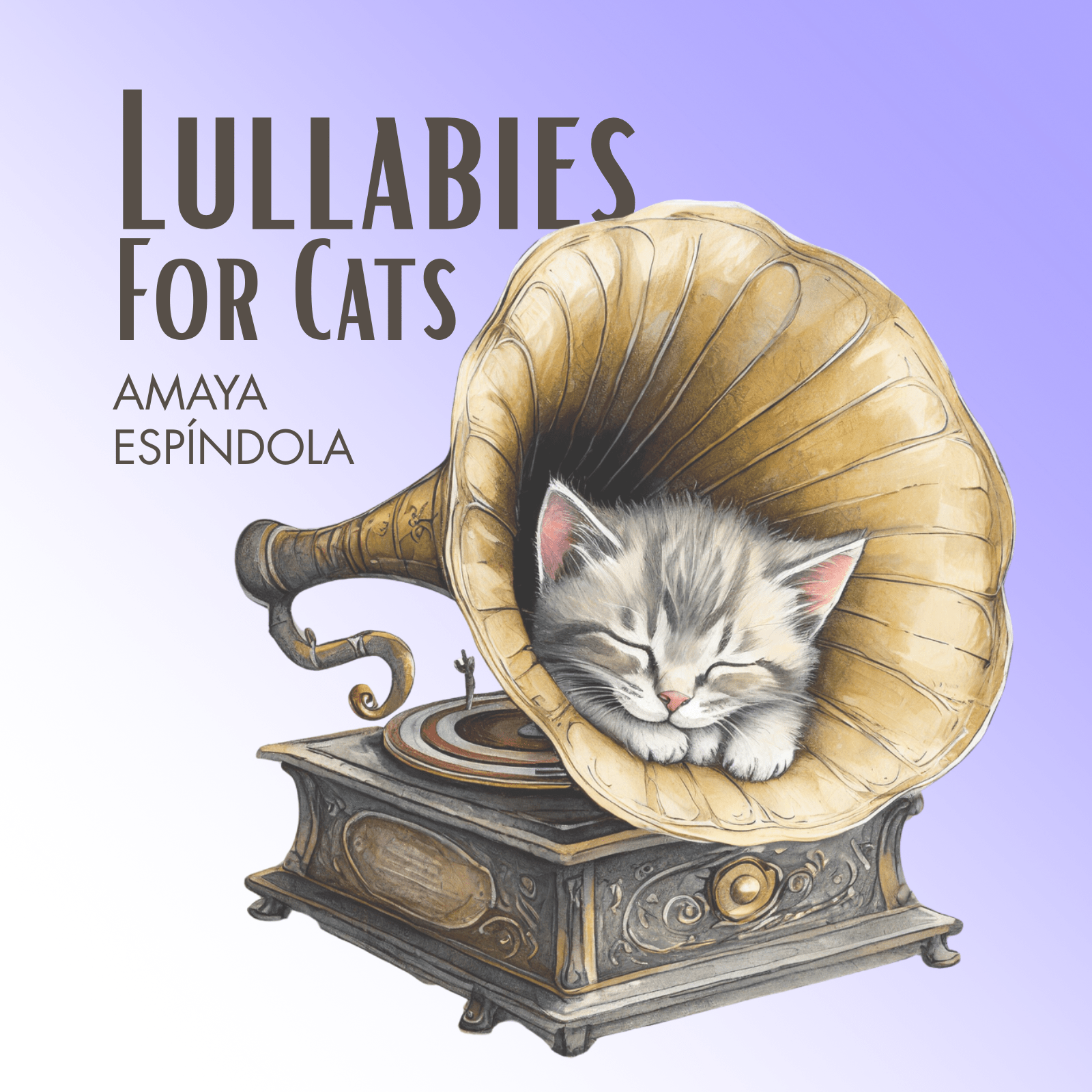
Lullabies are not just heard; they are felt. The vibration of the human voice while singing creates a resonant effect that soothes and harmonises the energy fields of those nearby, fostering a safe and relaxing environment.
How to make the most of the lullabies?
LISTEN, PERSONALISE, AND LEARN TO SING A LULLABY
Lullabies are a powerful tool that blend tradition, science, and emotional connection. When you sing a lullaby, you’re not just soothing—you’re creating a space for healing, love, and trust. If you’re ready to explore the transformative power of lullabies, whether for yourself, your baby, or your pet, I invite you to discover my personalised lullaby service. Together, we can turn every melody into a gift of wellbeing!
Listen at a moderate volume
The lullabies are recorded with a joyful intention. Our goal is not for a cat to sleep more hours, but to foster a relationship based on joy and trust.
Remember to listen at a low or moderate volume, as our ears are not the same as our cats.
SING THEM
The lullabies were created to be sung, but maybe you don’t feel comfortable singing. What if I told you that your voice is all you need to build a good relationship with your cat?
I am creating a membership programme and workshops to help you express your voice.
PERSONALISE
My voice is not like yours, and you may need to adjust the vocal register. It’s also recommended to sing them in your native language, so adaptations can be made to make them feel very natural to sing.
It includes adaptation, access to backing track and two vocal coaching lessons
FREQUENT ASKED QUESTIONS
Do I need to be a good singer for this to work?
It’s not about giving a concert, but about creating a moment of connection. We all have strengths in our voice that, once discovered, connect us with presence, intuition, and genuine intention. It’s not about singing perfectly in tune or mastering complex vocal techniques, but about using what you already have with awareness and tenderness.
What if I feel embarrassed?
That emotion also says something about you. Using your voice as an instrument of presence, confidence, and self-esteem can be a transformative practice. Singing to your cat is also an opportunity to listen to yourself and to express yourself better in all your relationships. And at the same time, it helps improve your feline companion’s well-being.
What does it mean for a lullaby to be personalised? Can’t I just use the one that’s already made?
The lullabies can be used as they are, but if you truly want to engage with the practice, the ideal is to personalise them. This personalisation can be done in language or vocal key. If your voice is naturally lower or higher, singing in an uncomfortable key can be frustrating. That’s why a short consultation is offered to identify which tone fits your voice best. From there, you’ll receive a karaoke-style video adapted for you, which you can comfortably use with your cats. This adjustment is saved for future lullabies, creating a unique and practical long-term experience.
Do you really think my voice can have a healing effect?
This is not a matter of belief. The human voice activates areas of the brain linked to well-being and the regulation of the nervous system. In fact, it is more powerful than recorded music or other sounds, even for people or animals with partial hearing loss. The voice regulates heart rate, influences emotions, and creates a field of safety and connection. It is a very powerful tool for supporting both physical and emotional processes.
What if my cat doesn’t react as I expected?
Don’t expect an immediate or spectacular reaction. Sometimes you’ll see your cat fall asleep or relax, other times it may simply seem like nothing is happening… but the effect builds up. Singing to your cat creates a safe emotional environment that supports their well-being. It’s not about “seeing results” as if it were a pill, but about building a space where your cat can feel accompanied and, in many cases, heal.

